CBR Frequently Asked Questions
Stay informed on the latest official information regarding the coconut rhinoceros beetle (CRB) outbreak in Hawaiʻi. This FAQ section offers clear, concise answers to your most pressing questions and details about the necessary control efforts.
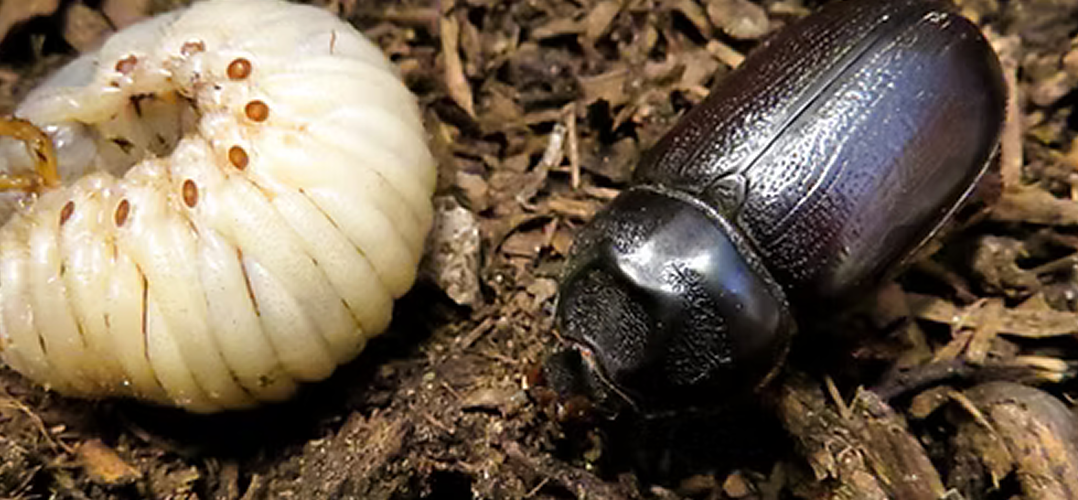
Adult CRBs are large, dark brown beetles, about 1.5 to 2 inches long, with a prominent horn on their head (the horn is larger in males). Their larvae are white grubs with a brown head, 1.5 to 2 inches long, often found curled in a “C” shape within damp or decaying plant material.
Adult CRBs are found on palm trees, especially coconut and oil palms, but will feed on other palms or plants. Their larvae are commonly found breeding in decaying organic matter such as mulch piles, compost, green waste, and dead palm stumps. CRBs are nocturnal and are most likely to be seen at dusk or at night.
Adult CRBs bore into the crown (the top growing part) of palm trees, including coconut palms, to feed on sap. This damages the developing leaves before they unfurl, causing distinctive V-shaped cuts in the fronds and holes through the midribs as the leaves grow out. Severe infestations can weaken the tree and, in some cases, lead to its death.
If you see a suspected CRB infestation or V-shaped cuts and holes in your palm fronds on your own property, you should contact a pest control company. DAB generally does treat pests on private property. If you see suspected CRB on public property, go to 643PEST.org or call (808) 643-PEST (7378). It is important not to attempt to move or dispose of beetles yourself, as this could inadvertently spread it.
Coconut Rhinoceros Beetles have wings and can fly from tree to tree in search of food.
You can help by properly managing green waste and mulch piles. Avoid creating and maintaining large, undisturbed piles of decaying organic material, as these can become attractive breeding sites for CRBs. If you are transporting mulch or green waste, be sure to check it thoroughly for beetles or larvae to avoid accidental spread. If you are in an area where active control and eradication is occurring, it is best to treat soil or mulch before moving. If transporting plants or soil interisland from O‘ahu to other islands, it must be treated and certified before movement.
Learn more about Coconut Rhinoceros Beetles at the Hawaiʻi Department of Agriculture and Biosecurity website. A great source of additional information is the Coconut Rhinoceros Beetle Response (CRBHawaii.org). They collaborate with a variety of partners, including DAB, the Department of Land and Natural Resources, University of Hawai‘i, and the USDA.
 Photos courtesy CRB Response