LFA Frequently Asked Questions
Stay informed on the latest official information regarding the little fire ant (LFA) in Hawaiʻi. This FAQ section offers clear, concise answers to your most pressing questions and details about control efforts and necessary precautions.
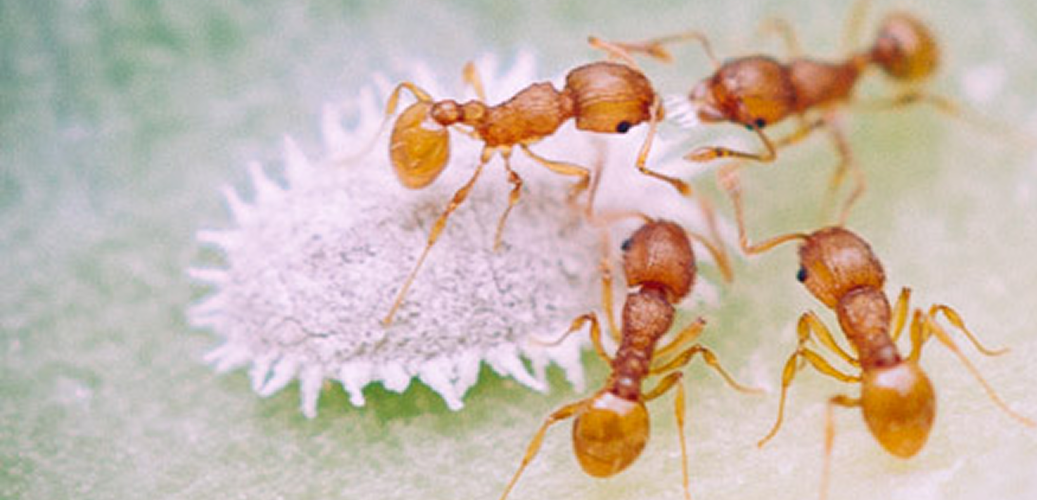
LFAs are very tiny, measuring only about 1/16 of an inch long. This small size makes them challenging to see without close inspection.
Stings from LFAs are known for causing a sharp, burning sensation, followed by intense itching and often a red welt that can persist for several hours or days. While most reactions are localized, some individuals may experience more significant allergic responses.
LFAs are highly adaptable and can be found in a wide variety of environments, including trees, plants, soil, leaf litter, and even inside homes. They often prefer shaded, moist areas. They can also be transported unknowingly through infested plants, soil, and agricultural products.
A simple and effective way to check for LFAs is to use the “peanut butter bait stick” test. Spread a thin layer of peanut butter on a chopstick or popsicle stick and place it in shaded areas around your yard, especially near plants or potential entry points to your home. After about an hour, carefully check the sticks for tiny ants.
If you suspect you have found LFAs on your own property, you can get assistance in identification by carefully collecting some ants (as noted above.) Learn more about how to treat LFAs on your property. You can also contact a professional pest control company. DAB may provide services on private property on some islands.
Go to www.643pest.org or call (808) 643-PEST (7378).
Learn more about Little Fire Ants at the Hawai‘i Department of Agriculture and Biosecurity website. Also, the Hawaiʻi Ant Lab operates as a project of the Pacific Cooperative Studies Unit of the University of Hawaiʻi at Mānoa, in cooperation with DAB, the Hawaii Invasive Species Council, USDA and others.
Photos courtesy Melody Euaparadorn – Hawaii Ant Lab